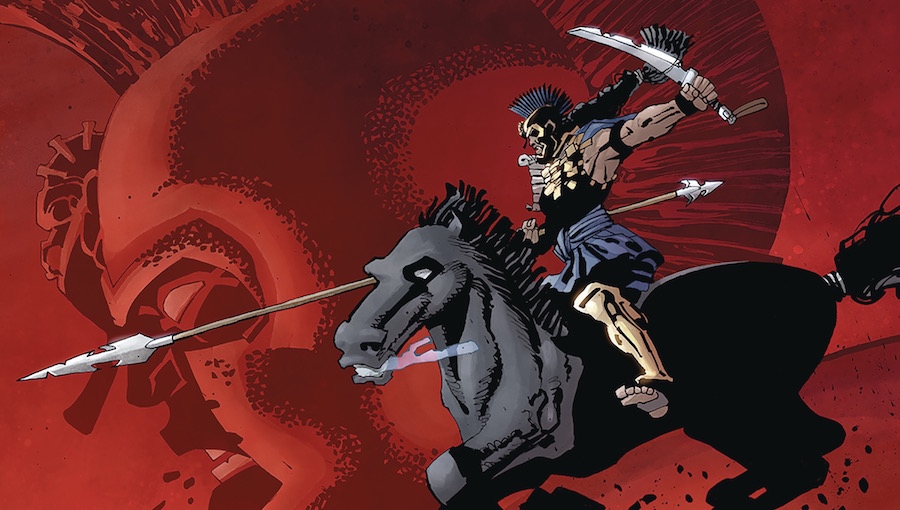
 What do I mean when I talk about “flexibility” on the battlefield?
Let me give you an example.
When Alexander the Great met the Persian emperor Xerxes at their first battle, he was in trouble. The 2 million men he stood up against with 50 thousand, was an overwhelming problem. The front itself was miles long, and he had so little men.
Alexander had some of his companions with him, an elite class of warriors that had been with him from young adult hood. So they were all very good at communicating and were on horseback.
What Alexander noticed in the middle of the battle was that the emperor Xerxes was alone BEHIND the troop formations. Being extremely daring as only Alexander. Alexander rode AROUND the army, and attacked Xerxes directly. Xerxes had to flee and the army of Xerxes fell into disarray.
That is how you win wars. You recognize an opportunity in the middle of the fight and change your strategy accordingly.
Now the Iranians are definitely not stupid and have fallen back in a mosaic strategy. Effectively decentralizing the command structure.
It is a very good respons to a strategy that tries to go for the top of a system, as with the decapitation strategy that we are doing.
So we need to change as well, decentralizing our strategy.
It’s how we win.
They are smart Persians, and a very worthy opponent. Treat them with the adequate respect they deserve.
G-d bless the victory of the American coalition, may we win.


